The Johari Window

The Johari Window focuses on openness, trust, feedback and self-awareness in the development of interpersonal relationships. Luft and Ingham's (1962) model is divided into quadrants:
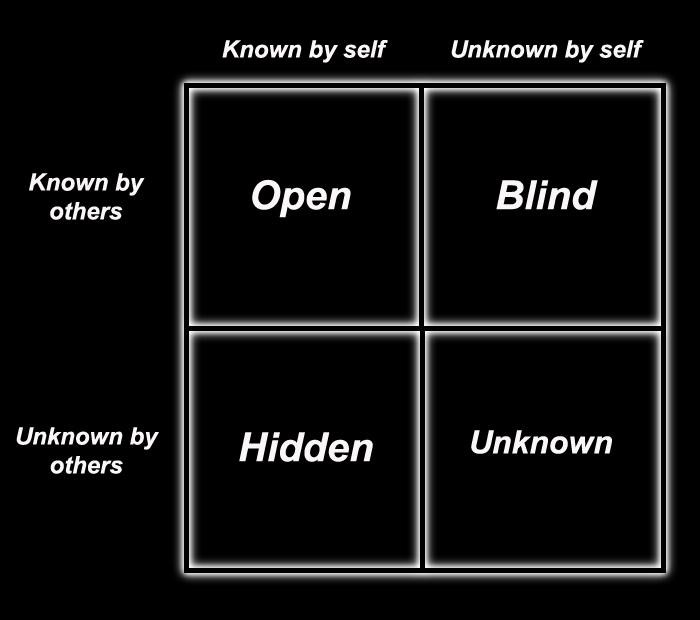 Open Area
Also known as the area of 'free activity', this part of the window includes the behaviour, motivations [goals and desires] etc. which are known to yourself and known to others in a group. With regards to your group of classmates on the Introduction to Human Development course, this area contains very little information at the moment, but it is likely to expand quite quickly as you share on the discussion boards.
Blind Area
This area includes the aspects of yourself which others can see but of which you are unaware. If you facilitate and actively respond to feedback, this area will shrink and your level of self-awareness will grow.
Hidden Area
Also known as the 'avoided area', this part of the window includes the aspects of yourself which you know but choose not to reveal to others. For example, hidden agendas or things which are sensitive or shameful.
Unknown Area
Neither you nor anyone else knows about these deeper aspects of your inner-self. However, there might be times when they rise to the surface, and you realise that they were there all along.
Using the Johari Window
Consider the Open and Hidden areas of your Johari Window. What do you generally share of yourself with others in a group? By disclosing aspects of yourself [your perceptions, behaviours, dreams etc.], you increase your Open area, thus creating commonality and trust in your group relationships. Luft and Ingham (1962) call this 'exposure'.
Consider the Blind area of your Johari Window. How often do you ask for feedback from others? How do you respond when someone gives you constructive criticism? To build your own reflective self-awareness, it is important to be open to the feedback of others, however challenging it might be. When your Open area expands into your Blind area, you can experience personal and interpersonal growth.
Finally, consider the Unknown or Mystery area. How can you learn more about these deeper aspects of yourself? Luft and Ingham (1962) suggest that you intentionally explore and try new things and pay attention to what stimulates you. Decreasing the Hidden and Blind areas of your window will help this process along.
See this blog post for tips on how to use the Johari Window for personal growth.